Office Relocation Services in Finsbury Park
Moving an office is rarely just about boxes and vans. It is about keeping work moving, protecting equipment, managing staff schedules, and making sure the next working day starts as smoothly as possible. For businesses looking for Office Relocation Services in Finsbury Park, the right moving team can make a huge difference. Whether you are relocating a small workspace, a shared office, a creative studio, or a larger commercial floor, a well-planned move helps reduce disruption and keeps your team focused on what matters most.
Finsbury Park is a busy, well-connected part of North London with a mix of business premises, converted buildings, high-street units, and residential streets that often double as home offices or small company bases. That variety brings opportunities, but it also brings moving challenges. Narrow roads, limited parking, shared access points, loading restrictions, and busy traffic at peak times all need to be considered carefully. A local office relocation team understands those conditions and can plan a move that fits the area, the building, and the realities of your business.
From initial planning through to dismantling, transport, and setup, office removals should be tailored to the size and pace of your organisation. That may include moving desks, filing cabinets, IT equipment, archive boxes, chairs, meeting room furniture, retail stock, specialist tools, or delicate items that need extra handling. If you are comparing providers, it is worth choosing a service that understands both business removals and the practical details of moving in and around Finsbury Park.
Why office relocation planning matters in Finsbury Park

Office moves are often more complex than people first expect. Even a relatively small relocation can affect calendars, client calls, deliveries, file access, and day-to-day productivity. In Finsbury Park, those pressures are amplified by local conditions: busy transport routes, mixed-use streets, older buildings, and commercial spaces that may not have generous loading areas. A thoughtful relocation plan helps avoid last-minute problems and makes the move feel organised rather than chaotic.
Local businesses often need a move that works around trading hours, team availability, and building access rules. Some offices are in shared premises where lifts must be booked in advance. Others are on upper floors in converted buildings where stair access or weight limits matter. In those situations, a team offering office moving services can assess the property properly before moving day and build a plan that reflects the space you actually have, not an idealised version of it.
For many customers, the real value of a local relocation service is peace of mind. A move handled by experienced professionals means furniture is taken apart and reassembled correctly, equipment is packed with care, and key items are placed where they are needed in the new office. When the move is well managed, staff can get back to work sooner, and the business avoids the unnecessary downtime that often comes with a poorly planned relocation.
What our office relocation service can include

Every office move is different, so the service should be flexible. Some customers need a full end-to-end relocation, while others only need help with transport and heavy lifting. A good local provider will usually build the service around your office size, property layout, and timetable. That can include pre-move planning, packing support, safe loading, careful transport, and placement of items in the new workplace.
Typical office relocation services may include:
- Initial site assessment and move planning
- Packing of office items, documents, and supplies
- Disassembly and reassembly of desks and workstations
- Safe moving of chairs, storage units, shelving, and meeting furniture
- Handling of IT equipment and cables with extra care
- Transport of boxes, archive files, and business essentials
- Loading and unloading support
- Placement of items in the new office according to your plan
- Clear labelling to help teams settle in faster
Some companies also ask for assistance with phased moves, especially when staff need to stay in operation during the relocation. In those cases, moving can be split into sections so that departments, desks, or storage areas are transferred in a workable sequence. This is especially useful for firms that cannot pause trading for a full day or more.
How office removals work from start to finish
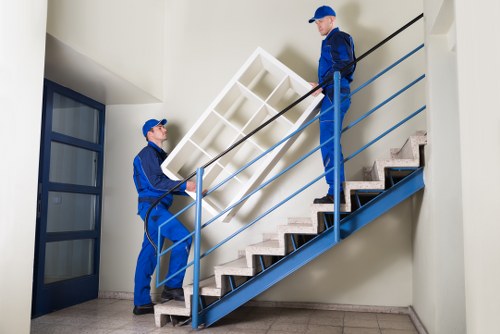
The best office relocation services are straightforward, transparent, and planned well in advance. The process usually begins with an understanding of what needs to move, where it is going, and when the new premises will be ready. For a local Finsbury Park move, that often includes checking access at both locations, identifying parking or loading options, and noting any restrictions from the building management or landlord.
Once the move has been assessed, the team can suggest the most efficient method. That might mean packing everything in advance, moving only after business hours, or using a staggered approach that avoids interrupting client work. Good communication is central to the process. Your team should know what is happening, what they need to pack, and which items should remain available until the final stage of the move.
On move day, the removals crew should arrive prepared with the right equipment, including trolleys, protective covers, straps, packing materials, and tools for dismantling furniture if needed. The aim is to move efficiently without rushing or damaging equipment. Once at the new office, the team can place items in the designated rooms or zones so that the business can start reassembling workstations in an organised way.
Common steps in a relocation plan
- Survey the old and new premises
- Agree the move date and timetable
- Identify furniture, files, and equipment to relocate
- Prepare labels, packing materials, and access arrangements
- Move items in the agreed order
- Reassemble and position key furniture
- Check that essential items are accessible first
Why local knowledge matters for Finsbury Park businesses

Choosing a team that knows Finsbury Park can save time and reduce stress. Local knowledge is not just about being nearby; it is about understanding how the area works on a practical level. Roads around the station, nearby commercial strips, and surrounding residential streets can be busy, and access arrangements can vary widely between buildings. A local mover is more likely to anticipate those details and plan accordingly.
That experience is particularly useful if your premises are near transport hubs, on upper floors, or located in a building with shared access. Some offices in the area are in modern commercial units with lift access, while others sit in older properties where stairways are narrow and entry points are tighter. A team familiar with these conditions can advise on the safest way to handle items and avoid unnecessary delays on the day.
Finsbury Park also borders several active neighbourhoods, including Highbury, Stroud Green, Crouch End, Holloway, Arsenal, and Manor House. Businesses often move between these areas, and local movers who regularly work across North London can coordinate routes more efficiently. That can matter when your move needs to fit around school traffic, commuter pressure, or restricted parking times. Local experience helps the job feel smoother from the first box to the final desk placement.
Local advantages at a glance
- Better understanding of loading access and parking limitations
- More realistic timing for busy streets and peak travel periods
- Practical familiarity with different property types
- Quicker response for short-notice planning or changes
- Better coordination for moves across North London
Support for all types of office and commercial moves

Office relocation is not limited to traditional corporate spaces. In Finsbury Park, businesses operate from a wide range of premises, and each one comes with its own moving needs. A flexible removals service can support start-ups, professional practices, creative teams, consultants, agencies, clinics, studios, and retail-adjacent offices. The goal is to move what you need, when you need it, with as little disruption as possible.
For smaller offices, the challenge is often speed and simplicity. Teams may have limited storage, fewer staff available to help, and tight turnaround times between vacating one location and starting at the next. For larger commercial premises, the priorities may include phased relocation, labelled departments, and careful handling of bulkier furniture or archives. In both cases, the removals plan should reflect the day-to-day realities of the business.
Some customers are relocating from mixed-use premises or a home office setup into a dedicated commercial space. Others are shifting within the same area to improve access, reduce rent, or gain more room for staff. In each case, the move should be handled with the same attention to detail. That means protecting important items, keeping key documents organised, and making sure essential equipment arrives in usable condition.
Examples of office moves we can support
- Small business offices
- Shared office spaces
- Creative studios and design workspaces
- Professional services offices
- Retail back offices and stock rooms
- Consultancy and remote-working hubs
- Multi-room commercial floors
Preparing your office for relocation
A well-prepared office move is usually faster, safer, and less disruptive. Even if the removals team handles the heavy lifting, your own preparation can make a major difference. The aim is to keep the process organised so that staff know what to pack, what to label, and what should be moved first. A good relocation begins long before the van arrives.
One of the most useful steps is to create a clear inventory of what is moving. This does not need to be complicated, but it should cover key furniture, devices, files, and special items. If there are items that require extra care, such as monitors, printers, shredders, or sensitive paperwork, those should be noted early. Simple labelling can save time later and helps the new office become functional more quickly.
It is also wise to review what no longer needs to be moved. Office relocations often reveal old furniture, duplicate items, or outdated storage that can be removed as part of the move. Reducing clutter means fewer boxes to transport and a cleaner start in the new premises. If you are arranging commercial removals in Finsbury Park, keeping the move lean and purposeful can be especially helpful where access is limited.
Useful preparation checklist
- Confirm the move date and access times
- Notify staff of packing responsibilities
- Label boxes by department or room
- Back up essential digital files before the move
- Separate priority items for first access at the new office
- Measure key furniture and doorways if needed
- Set aside items that will not be relocated
Protecting IT, files, and specialist equipment
Many office moves involve more than desks and chairs. Computers, monitors, servers, printers, routers, archived documents, and specialist tools often need careful handling to avoid damage or confusion. In some businesses, the real concern is not just physical safety but continuity. If the wrong cable is misplaced or a file box is not labelled properly, work can slow down after the move.
A professional team understands that equipment needs secure packing and sensible sequencing. IT items should be disconnected and packed in a controlled way, with cables, leads, and accessories kept together where possible. Files and records should be organised so that important documents remain easy to find once the new office is operational. If sensitive materials are involved, the removals plan should include clear handling instructions.
Some office customers also move items that are awkward in size or shape, such as display boards, shelving systems, stock, or specialist furniture. These items can often be managed safely when handled by trained movers with the right tools. The purpose is not simply to transport everything, but to transport it in a condition that allows work to resume quickly and confidently.
Parking, access, and timing considerations in the local area
Finsbury Park can present practical challenges that are easy to overlook at the planning stage. Parking near offices may be limited, some roads are busier at certain times of day, and building access can depend on shared entrances, lifts, or loading bays. These are exactly the details that should be considered before move day, not during it.
Timing matters as well. Some businesses prefer early starts to avoid traffic, while others choose evenings or weekends to reduce disruption. The best option depends on your office operations, your building rules, and the route between locations. A local removals provider can help identify the most workable time window and reduce the chance of delays caused by congestion or access conflicts.
If you are moving from a location with stairs, tight corridors, or a difficult entrance, it is worth telling the movers early. That allows them to bring the right equipment and plan the loading sequence properly. Efficient access planning can save time and protect your furniture, especially when the move involves larger workstations or multiple floors.
Questions to consider before booking
- Is there nearby parking or a loading area?
- Are there building restrictions on lift use or delivery times?
- Will the move happen during trading hours or after hours?
- Are there any large or heavy items that need extra planning?
- Do both premises have the same floor access conditions?
How pricing is usually influenced
Office relocation costs vary from move to move, which is why a tailored quote is usually the best starting point. Rather than relying on a one-size-fits-all estimate, a proper assessment considers the amount of furniture, the number of boxes, the distance between locations, and the complexity of access. If you need specialist packing, furniture dismantling, or out-of-hours moving, those factors can also affect the final price.
The shape of the move matters too. A straightforward relocation between two nearby offices may be relatively simple, while a larger commercial transfer with several departments, storage rooms, or IT-sensitive items requires more planning and labour. Transparency around pricing factors helps you compare services fairly and choose the option that suits your business.
For local customers, it is usually helpful to request a free quote after discussing the size and layout of both premises. That allows the moving company to give you a practical estimate based on what actually needs to be done. The more accurate the information you provide, the more useful the quote is likely to be. It can also help highlight any potential issues early, such as limited parking or stair access.
Common pricing factors
- Office size and quantity of items
- Distance between old and new premises
- Access conditions at both properties
- Need for packing or unpacking support
- Furniture dismantling and reassembly
- Special handling requirements for IT or fragile items
- Timing, including weekends or outside normal hours
Why choose a local company for office relocation services in Finsbury Park
When you are moving a business, convenience is only part of the picture. A local provider can offer practical advantages that matter on the day. They are more likely to understand the roads, the parking conditions, the building types, and the pace of the area. That can reduce friction and make it easier to deal with the small issues that often decide whether a move runs well or not.
A local team can also be easier to coordinate with if your plans change. Office relocations sometimes shift due to lease dates, fit-out delays, or business operations. Having a nearby company means planning can be more responsive, especially where timing needs to be adjusted. For firms in and around Finsbury Park, that flexibility can be a real benefit.
There is also value in working with movers who understand the local commercial landscape. Nearby neighbourhoods such as Archway, Seven Sisters, Islington, Holloway, Crouch End, and Highbury often feed into the same business network, and many companies move between them. A team that regularly handles business relocation services across North London will likely be better prepared for the realities of a local move than a provider with no area familiarity.
What to expect on moving day
Moving day should feel controlled, not rushed. Before anything is loaded, the team should confirm the plan, identify priority items, and make sure the route through the building is clear. Boxes should be stacked sensibly, furniture should be protected during transit, and fragile items should be treated carefully. The goal is to complete the relocation efficiently while preserving order.
If your business is staying open during the move, clear communication matters even more. Staff may need to know which areas will be accessible, when equipment will be unavailable, and where essential supplies are being taken. A professional office removals team can work in a way that supports those needs rather than adding to confusion. Good organisation on the day often makes the biggest difference to how quickly the office becomes usable again.
Once items arrive at the destination, they should be placed according to the agreed layout wherever possible. This helps reduce the amount of rearranging later and allows staff to begin setting up desks, meeting rooms, and shared spaces straight away. If the move includes furniture assembly, that should be handled methodically so everything is secure and ready for use.
Helpful moving day reminders
- Keep a list of priority items accessible
- Ensure staff know who is overseeing the move
- Have keys or access codes ready in advance
- Protect floors and walls where necessary
- Check that the new office layout matches the plan
Areas covered around Finsbury Park
Businesses in Finsbury Park often move within a wider North London area, so it helps to work with a company that can cover nearby neighbourhoods as well. Relocation services are commonly needed across surrounding districts where offices, studios, and mixed-use premises are spread between busy transport links and quieter side streets.
Areas often served include Highbury, Stroud Green, Holloway, Archway, Crouch End, Manor House, Islington, Seven Sisters, Arsenal, Tufnell Park, and Upper Holloway. This wider coverage is useful for businesses shifting between commercial hubs or relocating just a few streets away. Even a short-distance move can be logistically challenging if the buildings have different access points or loading requirements.
If your business is based near the station, close to local commercial parades, or in one of the area’s converted office spaces, a nearby moving team can respond with better timing and more relevant planning. That makes it easier to keep the move aligned with your operational needs rather than forcing your business to adapt to a rigid schedule.
Frequently asked questions
Can office relocation services in Finsbury Park handle small moves? Yes. Small offices, start-ups, and shared workspaces often benefit from a tailored move that focuses on the essentials. A smaller relocation can still require professional handling if there are narrow stairs, valuable equipment, or a need to move quickly.
Do you help with packing as well as transport? Many customers ask for packing support because it helps save time and reduces the risk of damage. Packing can include boxes, paperwork, office supplies, and careful preparation of furniture or equipment before transport. The exact service will depend on what you need and how much of the packing you want to handle internally.
Can the move be arranged outside normal business hours? In many cases, yes. Out-of-hours or weekend moves are often requested by companies that want to limit disruption. The best timing depends on building access, staff availability, and the route between premises.
What if my office has difficult access? That is common in Finsbury Park and surrounding areas. Older buildings, upper floors, narrow corridors, and limited parking can all be managed with proper planning. It is important to mention access details early so the move can be organised safely.
How far in advance should I book? It is best to book as early as possible, especially if your move is tied to lease dates or fit-out completion. Early planning gives you more flexibility on timing and helps make sure the move is arranged around your business needs.
Can you move furniture and office equipment together? Yes, office relocations usually combine both. Furniture, storage units, desks, chairs, and equipment are often moved in the same process, with care taken to keep everything organised and ready for setup at the new location.
Requesting a quote for your office move
If you are preparing to move premises, the easiest way to begin is to request a free quote and explain what needs relocating. Include the size of your office, the type of furniture you have, any IT equipment or filing systems, the move date, and any access details that may affect the job. The more detail you can provide, the more accurately the service can be planned.
A strong local office relocation service should be able to talk you through the practical side of the move, explain what is included, and flag any issues that may need attention before moving day. That might include parking restrictions, lift bookings, or the need for a phased relocation. If you are comparing options for Office Relocation Services in Finsbury Park, focus on clear communication, local understanding, and the ability to adapt the move to your business.
Whether you are moving a compact office or a larger commercial workplace, a properly managed relocation can reduce stress and help your team settle in faster. Contact us today to discuss your move, request a free quote, or book your service now. The right planning now can save your business a great deal of disruption later.